Financial markets
Financial markets
Primary and secondary financial markets
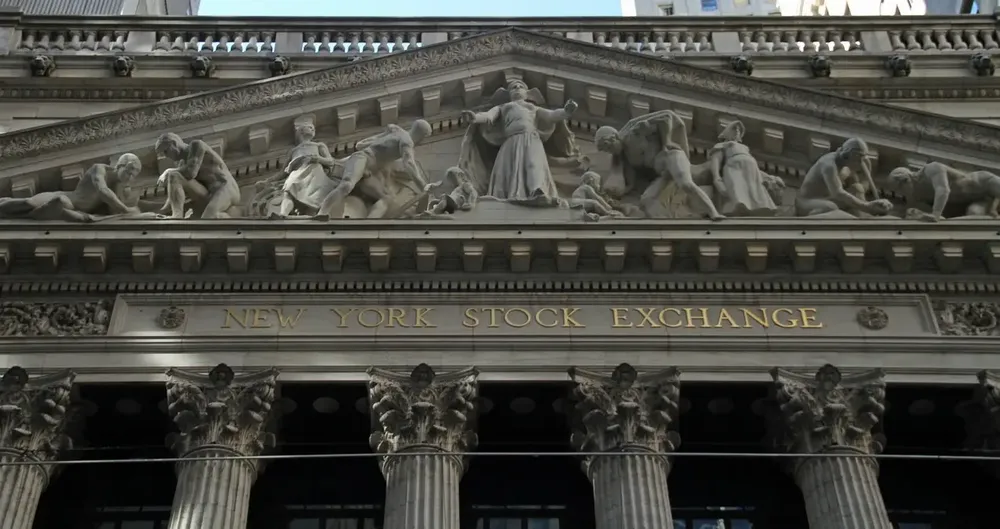
Financial products, including the supply of credit, mortgages, company shares and insurance, are bought and sold in primary and secondary financial markets. Financial products and securities are first issued into primary financial markets, which is where all financial products originate and where contracts are first drawn up. Secondary markets exist to enable buyers and sellers to resell their products and contracts to a third party. The most well know secondary financial market is the stock exchange, which allows trading in company shares that have been issued in the past.
All financial markets have a primary and secondary element to them. For example, in order to purchase a car, an individual may take out a loan from a high-street bank. At some point after this, the lending bank can sell the contract to another bank, which will pay the first bank a fee, or rate, and then collect the repayments from the initial borrower. Similarly, the owner of the car may insure it with a local insurer, who receives an initial fee (a premium). The insurer may then sell some of the risk to a re-insurer, who may also sell a part of this risk to another insurer.
The importance of financial markets
Financial markets are extremely important to the general health of an economy. With effective markets for credit and capital, borrowing and investment will be limited and the whole macro-economy can suffer. Financial markets often fail to form in command economies and in less developed economies, causing low levels of investment and low growth rates.
Money markets
Money markets involve the purchase and sale of very short-term debt. The main participants are the high-street banks and the Bank of England. The main vehicle for acquiring short-term finance is through a bank loan or overdraft, or through trade or Treasury bills of exchange. Banks traditionally lend to each other when they are short of funds and the Bank of England acts as lender of last resort to the money markets.
Capital markets
Capital markets involve the purchase and sale of long-term debt, including private sector stocks and shares, and private and public sector bonds. The primary capital market involves the initial sale and purchase of shares and bonds, and the secondary capital market involves the reselling of these securities. Shares and bonds are bought, held, or sold in the hope of making a speculate gain, or avoiding a speculative loss. Securities may also be sold to regain liquidity. Previously issued bonds can be bought back by the Bank of England, acting for the government, to increase liquidity in the economy through quantitative easing.
Mortgage markets
The mortgage market involves making long-term loans for the purpose of buying property. Once a loan is made, it can be traded on the second hand mortgage market. Like the stock exchange, the secondary mortgage market enables the original lenders, the banks, and building societies, to regain lost liquidity. The new owner of the mortgage debt is entitled to receive the mortgage repayments.
Insurance markets
Insurance involves the transfer of risk from one party, the insured, to another part, the insurer, for a fee, called a premium.
Insurance markets are often divided into general insurance and life insurance, but the principles are the same – transferring risk from one party to another.
Because premiums are collected regularly, but claims for losses are infrequent, or are made a long time in the future, insurance companies usually have very large funds that are invested to generate an investment income. This means insurance companies are important players in other financial markets, like share, bond, and derivatives markets.
One particular feature of the 2008 – 2009 financial crisis is the financial difficulty faced by many insurers who became involved in insuring other institutions against credit defaults. Specifically, credit default swaps (CDSs) are bought by investors wishing to protect themselves against defaults on mortgage-backed securities.