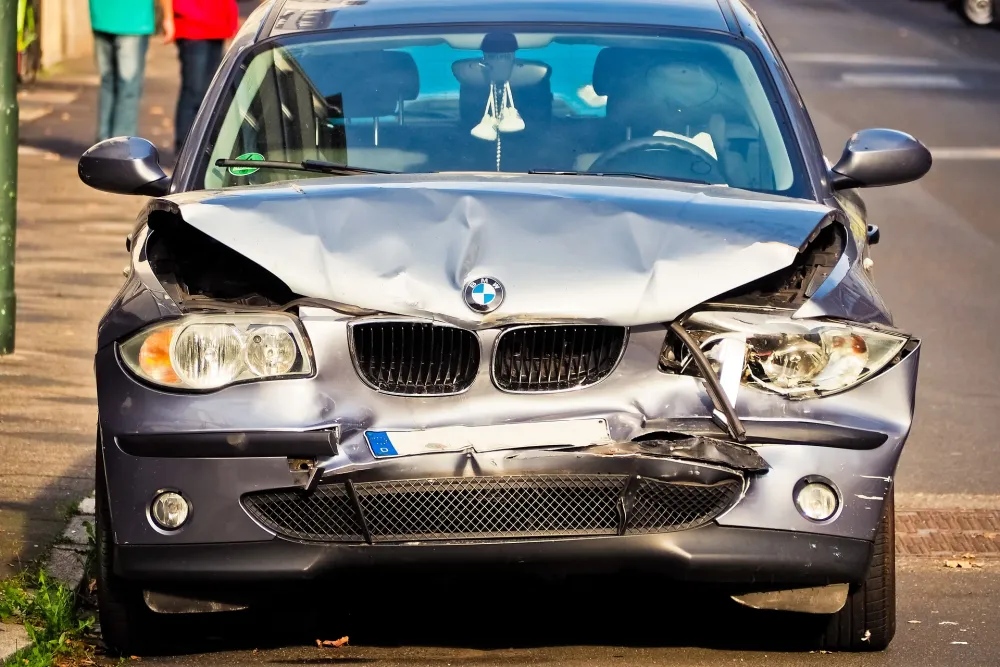
An image showing a car after accident to illustrate moral hazard.
Moral Hazard
Definition
Moral hazard refers to the tendency of individuals or firms that are insured or otherwise protected to take greater risks while making decisions, leading to inefficient resource allocation.
In other words, moral hazard is the tendency of people to increase their exposure to risk when insured or protected, especially when someone else bears the cost of that risk. This means that, once insured against the risk, the insured party may take greater risks that they would not take if they had to bear the full cost associated with any loss. Being insured against a risk may encourage individuals to take risks that they would not otherwise take. This is called moral hazard.
Moral Hazard is an example of information failure which arises due to asymmetric information.
Basic Terms
Information Failure
Information failure is a situation in a market when people do not have full or perfect information, leading to misallocation of resources. There are many examples of information failure, including under-consumption of merit goods, over-consumption of demerit goods, moral hazard, and adverse selection.
Asymmetric Information
Asymmetric information occurs when consumers and producers do not have an equal amount of information. This results in an information failure.
Conditions Necessary for Moral Hazard
Several conditions are typically necessary for moral hazard to arise:
Asymmetric Information
Moral hazard often occurs when there is an information asymmetry between two parties involved in a transaction or relationship. One party has more information or knowledge about their actions or behaviours than the other. This information asymmetry creates an opportunity for the party with more information to exploit or take advantage of the situation.
Lack of Monitoring or Control
Moral hazard is more likely to occur when there is insufficient monitoring or control over the actions of the party engaging in risky behaviour. If the actions or decisions of one party cannot be easily observed or controlled by the other party, there is a higher chance of moral hazard.
Incentives and Consequences
Moral hazard requires a situation where the party engaging in risky behavior has incentives to act in a way that is not in the best interest of the other party. This can happen when the party benefits from the risky behaviour while the negative consequences are borne by someone else. When a party does not face the full consequences of their actions, they may be more inclined to take risks or act recklessly.
Risk Pooling or Protection
Moral hazard often arises in situations where risk pooling or protection mechanisms exist. This can include insurance, bailouts, guarantees, or any other form of assistance that reduces or eliminates the negative consequences of risky behaviour. When individuals or entities are shielded from the full impact of their actions, they may be more likely to engage in behaviour that they otherwise would not.
Working of Moral Hazard
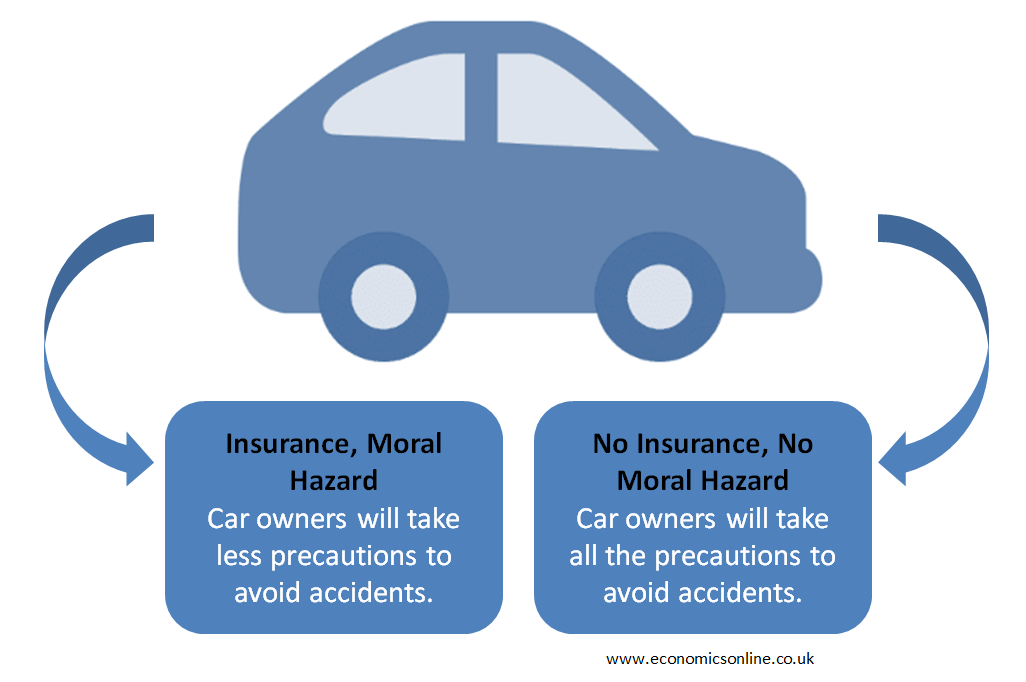
When there's a moral hazard, one person or group can take advantage of another. They can do things that are risky or costly without bearing the consequences. For instance, let's say an insurance company sells a car insurance policy to a customer. In this situation, the insurer is supposed to cover any damage to the vehicle.
Now, the customer might realize that they face less risk if they drive recklessly because the insurance company will foot most of the bill. So, they might drive really fast on slippery roads, knowing that the insurance company will likely pay for any damage to the car. Due to car insurance, the customer is likely to take on more risk. This is called moral hazard.
Why is Moral Hazard Important?
Moral hazard can lead to inefficiencies in resource allocation and economic outcomes. When one party is shielded from the consequences of their actions, they may engage in behaviour that is riskier or more reckless than they would otherwise. This can distort incentives and create imbalances in the economy, potentially leading to suboptimal allocation of resources and reduced overall economic efficiency.
Moral Hazard vs. Adverse Selection
Moral hazard refers to a situation where one party changes their behaviour or takes on additional risks because they are protected or insured against potential losses. It occurs after a transaction or agreement has taken place, and one party has the opportunity to exploit the other due to reduced personal responsibility for the consequences of their actions.
On the other hand, adverse selection occurs when one party possesses more information about their own characteristics, risks, or intentions than the other party. It typically arises before a transaction or agreement takes place. In adverse selection, the party with better information selectively chooses to participate in a transaction or obtain insurance, while the other party is left with an asymmetrically higher risk pool. This can lead to an imbalance of risks and, hence, negative outcomes for the party with less information.
For example, if an insurance firm offers the same insurance premiums for medical insurance to all applicants without considering their individual's health status, those with pre-existing chronic conditions might be more inclined to apply for insurance. The insurance company faces adverse selection because it attracts a disproportionately higher number of policyholders who are likely to have higher health care costs, resulting in financial challenges.
Examples of Moral Hazard
Health Insurance
One of the most common examples of moral hazard can be found in the insurance industry. When individuals have insurance coverage, they may be more inclined to take risks or engage in dangerous activities because they know they are protected from the financial consequences of their actions. For instance, someone with comprehensive car insurance may drive more recklessly, knowing that any potential damages will be covered by the insurance company.
Financial Sector
Moral hazard is also prevalent in the financial sector. During times of financial crisis, governments often step in to bail out troubled financial institutions, such as banks, to prevent the collapse of the entire system. However, this safety net can create a moral hazard. Knowing that they will be rescued in case of default if their risky investments fail, banks may be tempted to engage in excessive risk-taking activities, such as investing in high-risk assets or issuing risky loans to the borrowers. This behaviour can lead to a destabilization of the financial system and, in extreme cases, result in a financial crisis.
Principal-Agent Relationships
Principal-agent relationships are also susceptible to moral hazard. For example, in the corporate world, shareholders (principals) delegate decision-making authority to company executives (agents). Executives may take actions that benefit themselves personally, such as engaging in insider trading or pursuing short-term gains at the expense of the long-term health of the company, knowing that they may not bear the full consequences of their actions. This misalignment of incentives can lead to inefficiencies and reduced overall performance.
Mitigating Moral Hazards
Mitigating moral hazards is crucial for maintaining stability and fairness in economic systems. While the complete prevention of moral hazard might be challenging, several strategies can help minimize its impact. Here are some approaches to consider:
Enhanced Transparency and Disclosure
To address the issue of asymmetric information, it is crucial to promote transparency and open communication channels. By implementing mandatory disclosure requirements in insurance contracts, firms can provide the necessary information to their counterparties. This enables informed decision-making and reduces the potential for moral hazard arising from information asymmetry.
Robust Oversight Mechanism
To minimize moral hazard when there is insufficient monitoring or control, robust oversight mechanisms should be established. Regular audits, inspections, and regulatory oversight can help detect and prevent misconduct or excessive risk-taking.
Proper Incentive Structures
To mitigate moral hazard stemming from misaligned incentives and consequences, it is essential to design proper incentive structures that promote responsible behaviour.
Managing Risk Pooling or Protection
In situations involving risk pooling or protection mechanisms, moral hazards can be avoided by accurately evaluating risks and assigning appropriate costs or premiums to those risks. This ensures that the potential negative consequences of risky behaviour are not shifted onto others, mitigating the moral hazard associated with risk pooling or protection mechanisms.
Conclusion
In conclusion, moral hazard explains the unintended consequences of providing protection against negative consequences. Moral hazard has the potential to distort decision-making, increase risk-taking, and undermine the efficiency of many markets. Avoiding or minimising moral hazard requires a comprehensive and multifaceted approach. By providing perfect information to all parties, moral hazard can be reduced to a large extent.