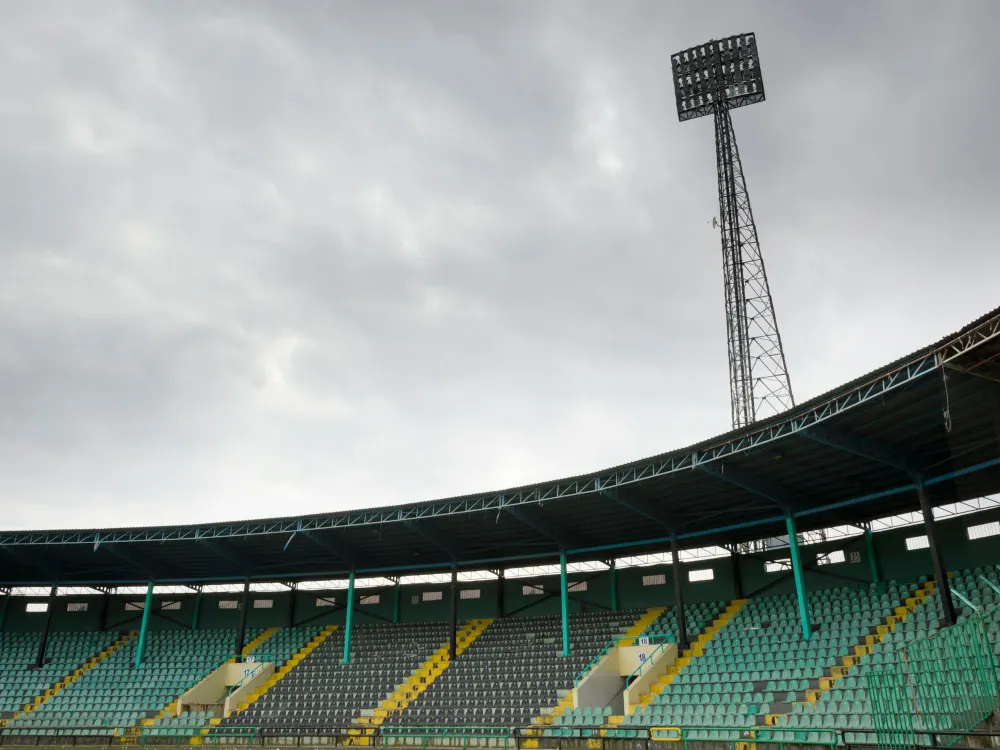
Empty stadium with green and yellow seats under a cloudy sky, featuring a tall floodlight tower in the background.
Cost–Benefit Analysis of Stadium Redevelopment
When municipalities consider rehabilitating or replacing an arena, feelings dominate, and numbers are usually an afterthought. Decision-makers can use a definitive framework for venue upgrade economics to evaluate assertions concerning job creation, revitalization, and enhancing the fan experience on game day. Programs that have been recently implemented in Europe, including major overhaul proposals made in Italy, will serve as an excellent backdrop to demonstrate the application of CBA in this arena.
Define the project and the counterfactual
The CBA begins with a project description from the city’s perspective that clearly states what is going to be built, rather than relying on a “nice brochure.” The scope of the project determines whether it involves a phased refurbishment, a total rebuild of the existing facility, or the construction of a new facility at a different location, complete with a transport interchange and surrounding mixed-use development. Depending on the option selected, there will be corresponding differences in costs, delivery risk, and externalities.
The counterfactual does not equate to “doing nothing.” Instead, it represents a maintain-and-comply pathway in which essential safety, accessibility, and regulatory works are carried out to keep the existing facility operational. Many older stadia also face rising maintenance costs and lost revenues due to poor sightlines, outdated concession stands, and limited digital capacity. The baseline should therefore incorporate these costs and revenue losses before the net benefits of a renovation project can be accurately assessed.
Identify costs across the lifecycle
- The expectation of construction cost includes contract prices for labor and materials at current pricing levels, design development and contingencies for cost overruns.
- Realistic financing costs for construction loans and cost of credit including anticipated fluctuations in interest rates.
- Ongoing operation and maintenance for security, janitorial services, utilities, periodic replacement of seats, turnstiles, catering equipment and broadcasting systems.
- Potential cost impacts of interruption to team performance due to disruption during construction or reduced venue capacity for a full season.
- Decommissioning/Salvaging of all unused or temporary structures/facilities.
Examples of upgrading Italian stadiums highlight differences between initial capital expenditures versus full life cycle costs of stadiums. The addition of roof upgrades, adding additional routes of accessibility as well as modernizing electronic infrastructure are required for compliance with standard, however, all of these activities will also create an on-going maintenance burden which should be a budget item rather than a future planned expense.
Quantify benefits that pass an evidence test
The advantages of enhancing stadiums can be separated into three categories: match day revenue; year-round use; spillover impacts. The major disadvantage is double counting, so care must be taken to keep cash flows and spillover cash flows from each other.
- Venue Benefits:
Venue enhancements, such as improved concourse layouts and acoustics, as well as flexible bowl configurations that give the venue more configuration options, will increase attendance and average spend per person. Luxury boxes (VIP Suites), cashless concession stands, and dynamic pricing models will improve each venue's overall gross revenue earned (margins). - Fan/User Benefits:
Fans appreciate reduced wait times, improved circulation (i.e., egress from the venue), and better sightlines. This can be calculated in dollars via time savings, and willingness to pay (i.e., based on survey results from similar projects). Lastly, accessibility improvements create benefits for families with disabled members and non-disabled family members that go beyond ticket sales. - Economic Spillovers:
Local neighbourhood businesses benefit from the additional foot traffic created by events. Specifically, by having public spaces and mass transit links nearby, local businesses can capture the benefits of foot traffic before and after an event. The evidence from the prior refurbishments in Europe indicates that the greatest benefits are achieved when venues are located within easy access to a major public transportation system. Cities that boast large, citywide economic growth as a result of a single venue should be approached with caution, and only if such growth is supported by sound multiplier analysis and/or appropriate displacement studies. - Risk Mitigation and Compliance:
By meeting modern safety, sustainability, and broadcast standards, owners/management can mitigate the risk of having to pay large fines, cancelling events, or losing brand equity or customer loyalty. Additionally, by upgrading to the use of more energy efficient LED lighting and smarter heating, ventilation, and air conditioning systems, ownership can save significant amounts of money on utility bills along with the ability to measure the payback period for such energy efficiency improvements.
Avoid the usual CBA pitfalls
- Reference Class Forecasting: Compare the resources and time required to successfully complete upgrades to other similar venues in Europe rather than using a 'guess' to determine the costs/resources to upgrade your own venue.
- Displacement & Substitution: Include the dollar amount spent to transfer to a new venue as these dollars otherwise would have been spent competing with your existing location.
- Operational Realism: Make forecast estimates using current vendor and facility costs based on actual resource expenditures at previous facilities versus historical cost comparisons after completion of previous venue upgrades.
- Phasing Costs: Include estimates for lost revenues due to the closure of venues during the phase of construction for an upgrade, along with costs associated with establishing temporary operating facilities while upgrading or constructing a new venue.
- Cycle Renewal: Include future replacement costs for facilities/systems with high cost-to-maintain activity rates such as POS terminals, turnstiles and cabling for broadcasting purposes in your forecasts.
Distribution matters as much as totals
While a project may exhibit a positive net present value (NPV), it can still face resistance from local political entities and elected officials if its benefits are concentrated in politically or geographically sensitive areas. As a result, the teaching of cost-benefit analysis (CBA) for stadium projects should emphasise identifying who benefits from the investment, including:
(i) beneficiaries of hospitality boxes and naming rights
(ii) communities affected by traffic congestion during match-day events
(iii) local amateur clubs and non-profit community groups that may be priced out of accessing the stadium or public facility
In addition, stakeholder tables that clearly identify winners and losers allow project teams to visualise trade-offs and design mitigation strategies. These may include subsidised community access hours, improved pedestrian routes, noise management plans, and local hiring requirements.
From numbers to a decision
The results of monetizing costs and benefits can be tested using a variety of assumptions. Several common assumptions would include higher than anticipated capital expenditures ("capital expenditure" over runs), less growth in attendance than expected, less money saved in terms of energy consumption than expected and longer timeframes than expected to secure bookings for concerts based on lesser demand. A sound business case retains its integrity when subjected to conditions that are reasonably likely to occur in a downside direction, as well as when it can be demonstrably validated through a best-case scenario approach.
Strategic considerations are also an important component when building out decision-making frameworks for Italy, as well as other European countries. Standards compliance, eligibility for tournament participation, and resilience to extreme weather conditions are all factors that may hold additional value, which may not be captured through traditional revenue channels. Scorecards detailing Strategic and Economic performance will provide an outline for elected officials on how to adequately defend the merits of their decision in supporting the public.
A concise teaching template
- Outline the project scope and the counterfactual scenario.
- Create a life cycle cost model that has realistic operating and renewal lines.
- Monetize the direct venue benefits created by users, the indirect venue benefits to the community, the value of the venue as a source of externalities, and the value of complying with government regulations without over-counting them.
- Utilize reference benchmarks and a displacement test method.
- Test the distributions of results, then stress test the results under adverse business conditions to determine economic viability.
This systematic method will separate civic pride from sound investment principles by establishing a process for cities to create facilities that are compatible with present-day expectations, will guarantee that they give the community the greatest return on their investments, and will continue to operate successfully in the real world.