How AI trading bots are changing forex market participation
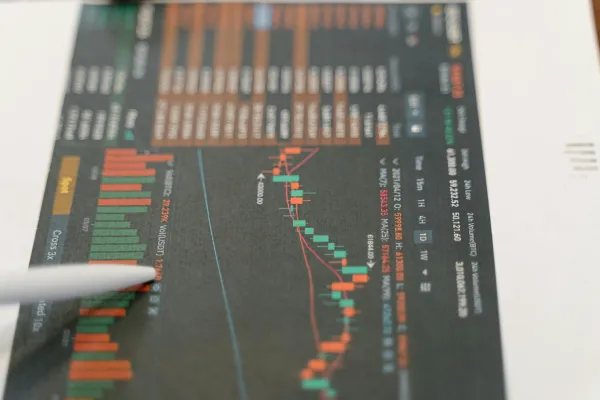
The global foreign exchange market is being revolutionised by artificial intelligence (AI). From retail traders to institutional investors, the effect can be felt by all types of investors as AI trading bots are changing how market participants do analysis, implement trading strategies and communicate in the world's largest financial market.
The foreign exchange market is extremely fast-moving, with trillions of dollars changing hands every day. Traders have used technology to keep up with this pace throughout history. Recently, a new force in the market has emerged; artificial intelligence (AI).
AI trading bots were once viewed as extraordinary trading tools of large hedge funds and quants in finance. Now we are seeing retail traders, everyday people, utilizing these same automated, advanced trading systems. Retail traders are now using these systems to analyse market data, identify trading patterns and execute trades automatically - levelling the playing field and widening access to the forex trading arena.
As a result; this has created a number of important questions for economists and market analysts: Are AI trading bots actually making markets smarter? Have AI trading tools changed how traders think or trade? What is the next step once AI continues to develop?
A market built for automation
The purpose of Forex is to automate trading. Unlike stocks that are paused during the night, currencies trade 24 hours a day through major cities: London, New York and Tokyo. This round-the-clock trading generates a wealth of price data. While an individual can analyze charts and data points, there are limitations to how many price points any individual can track at one time. By using AI bots, those limitations no longer exist.
AI bots can track multiple currency pairs simultaneously, analyze multiple years of historical data, analyze technical indicators and place trades in the blink of an eye. There is no delay following the trader’s click on a “buy” button; the bot simply reacts instantaneously.
From an economics standpoint, automation reduces the human limitations of attention. As more traders act upon more data, markets become sharper and efficient. They become increasingly competitive. It’s a much faster game.
Lowering the barriers for retail traders
The most important thing that has changed is that it is so much easier for everyday traders to get involved. Just a few years ago, algorithmic trading was limited to the world's largest financial institutions, such as banks and hedge funds, with the money and quant teams to build out these platforms. Now, any individual can use AI-driven tools on their laptop. There are platforms that integrate with trading terminals to provide all the functionality of a trading terminal without the need for any coding; just set your strategy, and the algorithmic trading bot will take care of placing orders for you.
Some of the platforms focus on a specific niche within algorithmic trading, such as platforms that specialize in expert advisor (EA) technology. For example, there are websites that are specifically designed for super-liquid currency pairs like the Euro to the U.S. dollar and provide traders with detailed guides on how to properly backtest and execute bot orders.
In addition, some developers are creating AI trading bots for forex markets, with optimized functionality for specific currency pairs like EUR/USD, allowing for high levels of accuracy when trading. They provide automated execution of trades, highly effective algorithmic trading strategies, and advanced risk management tools to help traders maintain discipline and develop a systematic process for trading. Finally, while no algorithmic trading bot can guarantee profitability, the growth and development of the algorithmic trading industry have been nothing short of incredible; the same processes that used to require an entire team of PhDs and a large capital investment to execute can now be accomplished while sitting on your couch!
Data, speed and the economics of decision making
The impact of AI (artificial intelligence) is changing how decisions are made in the marketplace. A traditional trader would look at charts, news, inflation or central bank activity, and then execute a trade. This isn’t the case with AI.
AI uses an incredible amount of data and analyzes it, including historical price data, technical indicators and even non-standard or unusual data sources. From all this data, AI positions with machine learning (or other algorithms) that humans are likely never to see. Incredibly, AI has the additional advantage of speed. In the foreign exchange market (quotes), prices can change in milliseconds (1/10 second). When there is a buy or sell signal, AI does not wait, it executes the trade immediately.
The use of thousands of algorithms executing trades from the same information sources or signals will lead to increased volatility in prices and, on occasion, may cause the same price movement as more than one algorithm will have been triggered. Economists refer to this as "algorithmic clustering." Essentially, when multiple algorithms have been set to trigger under the same conditions, the results will behave like a coordinated (i.e., synchronized) market and create much greater price movements than would have occurred otherwise.
Risk management in an automated world
Although AI trading may be exciting to many people, the most important thing to remember if you really want to be a successful trader is that risk management should be your number 1 focus. Automating your trades takes away much of the emotional element of executing trades, but it brings with it additional concerns. An automated trading strategy that has been poorly designed can create automatic trading losses, in most cases, before you even know what the problem is.
For this reason, when evaluating the best automated trading systems you will want to look for systems that have built-in strict risk controls such as stop-losses, position sizing, maximum daily caps, volatility filters, etc.
One of the most important points to remember is that, while AI-based trading tools can be very powerful, they do not perform magic. You cannot just turn them loose and expect them to produce miracles. You will need to continually monitor the performance of the automated trading system, spend time testing the system and carefully rolling out the system. Some may claim that the greatest benefit of utilizing an automated trading system is the discipline it instills upon the trader.
The changing structure of forex participation
As artificial intelligence (AI) transforms how business is conducted, it is also reshaping the composition of market participants. The distinction between retail and professional traders is becoming increasingly blurred. Individual traders now have access to analytical tools and data that were, until recently, available only to large banks and institutional trading desks.
Meanwhile, financial institutions are not passive observers. They are developing increasingly advanced algorithmic trading technologies that are more adaptive and sophisticated than ever before. These institutions continuously refine and update their models to keep pace with evolving market conditions. Taken together, these trends suggest that financial markets will become increasingly technology-driven.