Transaction Costs in Field Service: How Tree Service Apps Reduce Operational Friction
Hidden coordination costs are everywhere in field service
Transaction costs, in economic terms, are the hidden costs associated with executing work. They include time, effort, and resources expended to coordinate people, information, timing, and decisions surrounding the execution of a particular service, not the immediate cost of the service itself. That analytical perspective proves particularly valuable when considering businesses that provide field services, and tree service apps are beginning to play an increasingly important and beneficial role in that respect.
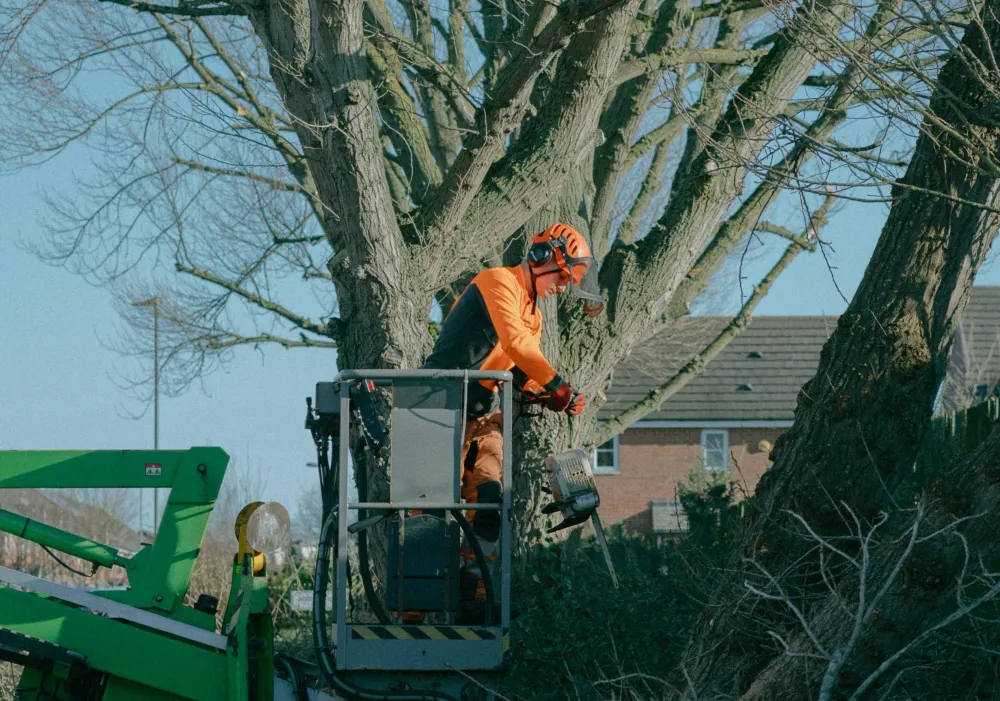
Tree care serves as a great example because it involves executing work across mobile crews, unpredictable weather conditions, communicating with customers, and is dependent upon site-specific execution. There could be multiple elements to completing one job, including estimates, schedule generation, route planning, assigning crews to jobs, coordinating equipment to the job site, entering notes about the job in a job folder, obtaining customer approval before invoicing the job and preparing the final invoice. When each of those functions is managed by a separate spreadsheet, or phone call, text message or paper notes, the result is less efficient than doing them all within one transactional environment. In addition, it generates a continual source of transaction cost friction.
Disconnected workflows create real economic waste
One of the main findings from transaction cost economics is that firms exist, at least partially, to help minimize the cost of coordination. When coordinating with another party is more difficult than it should be, waste (ie. economic waste of some kind) builds up. In a field service business, this waste manifests itself through duplicate data entry, missed updates, excessive phone calls, delays in providing estimates, unnecessary travel, and jobs commencing before adequate context is provided.
The costs associated with these inefficiencies are difficult to estimate because they do not appear cleanly within accounting records; instead, they typically manifest as slower response times, decreased overall productivity from the labour force, reduced confidence from customers, and an increased amount of management time spent managing the operations of the company. Over time, this friction between all parties involved will have as much of an effect on profit margins as direct expenses would.
Better information lowers search, communication, and monitoring costs
The user-built tree service application will assist in decreasing many different types of transaction costs at the same time. Internal search costs are reduced by providing easy access to job details, customer records, site notes, and any scheduling changes made. Communication costs are reduced by replacing fragmented updates via e-mail and other sources with an operational shared record of activities performed. Monitoring costs are reduced as the progress or lack of progress, changes in status, and responsibilities can now be readily seen across the workflow.
This is important because the overall economic efficiency of a business is not just the number of labour hours done but also the amount of administrative / managerial effort needed to keep all activity coordinated. The easier it is for people to find and use pertinent information, the quicker decisions can be made and with less friction.
Allocation improves when the workflow is centralized
Misallocation of resources (wrong crew sent to wrong site, missing equipment, underestimating job length) results in significant inefficiencies in field service, as these are not only coordination issues, but also allocation issues from an economic standpoint.
When a company uses one central system, both labor and equipment can be matched more logically with job requirements. Job changes can be captured sooner and businesses waste less time correcting misallocations. Therefore, there is greater throughput, less idle capacity, and more efficient use of both personnel and assets.
Specialization creates economic value through fit
Generic business programs typically do not perform as well in field service environments as more specialized solutions, primarily because they fail to reflect operational realities. While customer relationship management (CRM) systems may store customer information and calendar tools can schedule appointments, neither provides the capabilities needed to sequence work, route field service workers, coordinate crews, or address job-site complexities.
This is why specialized applications for tree service contractors can create greater economic value than generic programs, by reducing the need for translation between unrelated tools rather than simply adding features. When software is tailored to the business, this closer fit reduces the hidden costs associated with adapting business processes to the software.
Customers also bear transaction costs when systems are weak
Transaction costs are present both inside a company and from the customer’s perspective. Clients endure transaction costs in the form of delayed estimate responses, poor communication of job timing, excessive clarification calls, and inconsistent communications from an exchange partner. Reducing this friction between a client and a company increases the efficiency of the exchange.
Implementing a well-structured application enables an organization to create more accurate estimates, maintain continuity from request through completion, and provide reliable communications of changes to agreed upon terms of the exchange. This creates trust and accelerates the client’s ability to make decisions. The application improves not just the internal coordination of a business, but the overall quality of the market transaction.
Conclusion
Efficiency in service industries is often driven by reductions in hidden friction in routine coordination, rather than by innovation. The theory of transaction cost economics helps explain this phenomenon. Digital systems reduce the resources required to acquire information, communicate changes, track progress, and coordinate decisions, compared to traditional methods. As a result, overall firm productivity can increase even when the core service remains unchanged.
Tree service app development is a useful case study because it shows how software solutions reduce operational friction through better organization of information. Firms that organize their information more effectively tend to perform better, simply because they waste fewer resources on coordination costs.