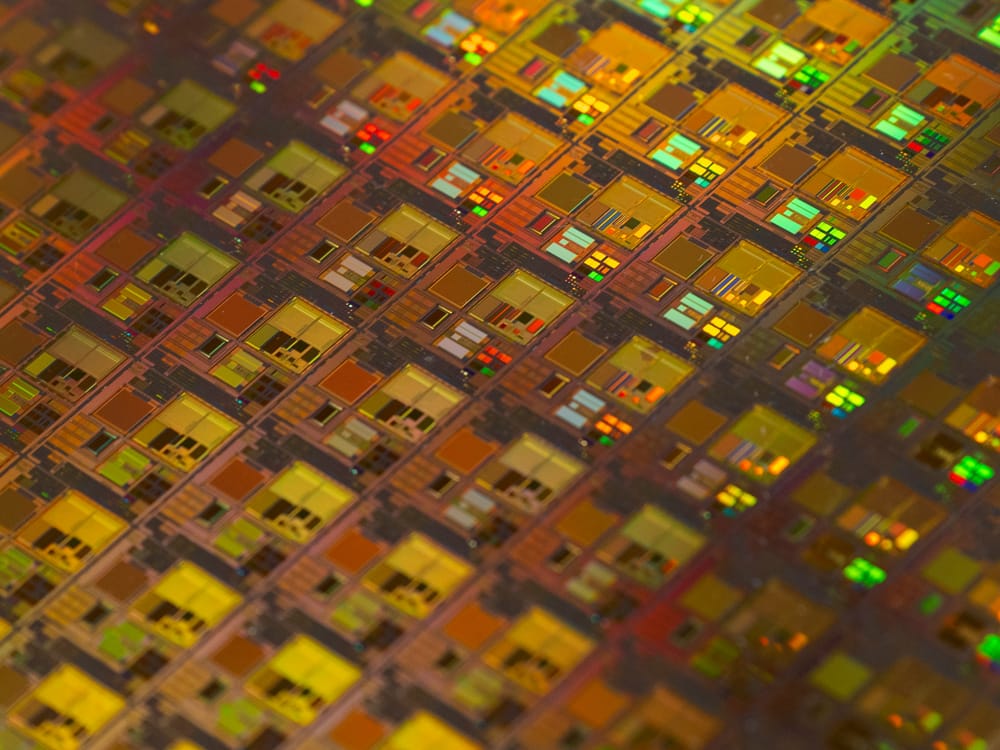
Rows of semiconductor chips.
Cryoin Europe: High-Purity Solutions for Future Technologies
If you ask a process engineer at a compound semiconductor fabrication facility what keeps them awake at night, “bulk gas purity” will rarely be the first answer. More likely, they will point to a yield excursion that took weeks to trace back to an incoming material nonconformance.
High-purity gases occupy an unusual position in semiconductor manufacturing. A single off-specification gas batch can halt production or compromise yields, yet bulk gases are so commonplace within the supply chain that procurement departments have often treated them as commodities until a problem occurs.
This disparity between the perceived and actual operational importance of bulk gas purity is precisely the issue specialist suppliers aim to address.
The Purity Problem Is Not One Problem
“High purity” can be a relative term, and conflating different definitions of purity can lead to improperly specified sourcing agreements. For example, nitrogen gas used in an academic research laboratory and nitrogen supplied as a feedstock for an atomic layer deposition tool may both carry a 99.999% purity specification. However, the acceptance criteria for each application differ significantly due to varying limits on impurities such as oxygen, moisture, carbon monoxide, and hydrocarbons.
Cryoin Europe supplies high-purity gases at specification levels tailored to the requirements of each application. Purchasing gases solely on the basis of catalogue specifications may increase operating costs, while purchasing gases below the required purity level may increase the risk of suspended operations or compromised product quality. Proper gas specification therefore requires an understanding of the downstream application, rather than reliance solely on the headline purity number.
Which Gases, and Why the Production Routes Differ
*"High-purity gas" includes many molecules produced in very different ways. Most commonly, cryogenic air separation is used to produce high-purity oxygen, nitrogen, and argon. This is done using cryogenic distillation (the process of removing impurities from a substance that is frozen) and then after the gas has been separated into its pure state it goes through additional processes to remove any remaining impurities.
Hydrogen and helium have completely different supply chains than the primary gases produced in the atmosphere. The most common noble gases, including krypton and xenon, come from byproduct fractions produced during cryogenic air separation but are found only at ppm (parts-per-million) concentrations. Because they are produced in such small amounts, they go through multiple stages of concentration and purification before they meet the requirements for industrial uses.
Different production and delivery methods for high-purity gases present different purity-related engineering challenges. Systems designed to create and deliver cryogenic high-purity gases must not allow moisture or hydrocarbon contamination to enter them. In addition, elimination of different materials compatibility is a separate engineering issue because certain elastomeric materials and lubricants can be incompatible with high-pressure high-purity oxygen streams during cylinder connections and gas transfer operations. Furthermore, the cleanliness of the cylinders and delivery apparatus is an important engineering parameter, not simply a logistical one.
Cryoin Europe has implemented all of these purity management considerations for all of its gas delivery operations, including the noble gases, and has a dedicated sobering plant to process noble gases."
Applications Where Purity Grade Is a Design Parameter
Several advanced technology sectors have developed impurity specifications that have become increasingly difficult to verify reliably through analytical methods, even within the past decade.
Semiconductor and display manufacturing consumes substantial quantities of nitrogen, argon, hydrogen, and specialty gases through lithography, chemical vapor deposition (CVD), etching, and diffusion processes. Trace amounts of oxygen and moisture within carrier gases can affect oxide growth rates and interface quality in ways that are measurable but not always predictable. As a result, incoming gas purity specifications at advanced technology nodes are now incorporated directly into process qualification documentation.
Laser technology — Excimer lasers used in lithography and materials processing rely on halogen–noble gas mixtures in which both components must meet extremely strict purity standards. The performance of KrF and ArF laser systems, as well as the operational lifespan of their optics, is highly sensitive to trace contaminant concentrations within the fill gas. Cryoin Europe supplies high-purity krypton and related noble gases into this market, where batch-to-batch consistency is considered just as important as the underlying purity specifications themselves.
Space and aerospace applications — Xenon used in electric propulsion systems must meet purity specifications significantly stricter than those required for conventional industrial-grade applications. Propellant purity directly affects thruster efficiency, component lifespan, and long-term operational stability. Contamination-induced degradation within ion engines is effectively irreversible once a spacecraft has entered orbit, which is why supply-chain traceability and documentation standards within this sector are exceptionally rigorous.
Medical devices and analytical instrumentation — Noble gases used in MRI systems, nuclear medicine, and analytical instruments are highly sensitive to supply interruption and purity drift, both of which can create immediate operational consequences.
Analytical Verification: The Gap Between Certificate and Reality
A certificate of analysis is a snapshot of one measurement, on one sample, at one point in the supply chain. For routine industrial gases in non-critical applications, that's usually sufficient. For high-purity supply into sensitive processes, it isn't - and the gap between certificate and actual delivered quality is where problems accumulate.
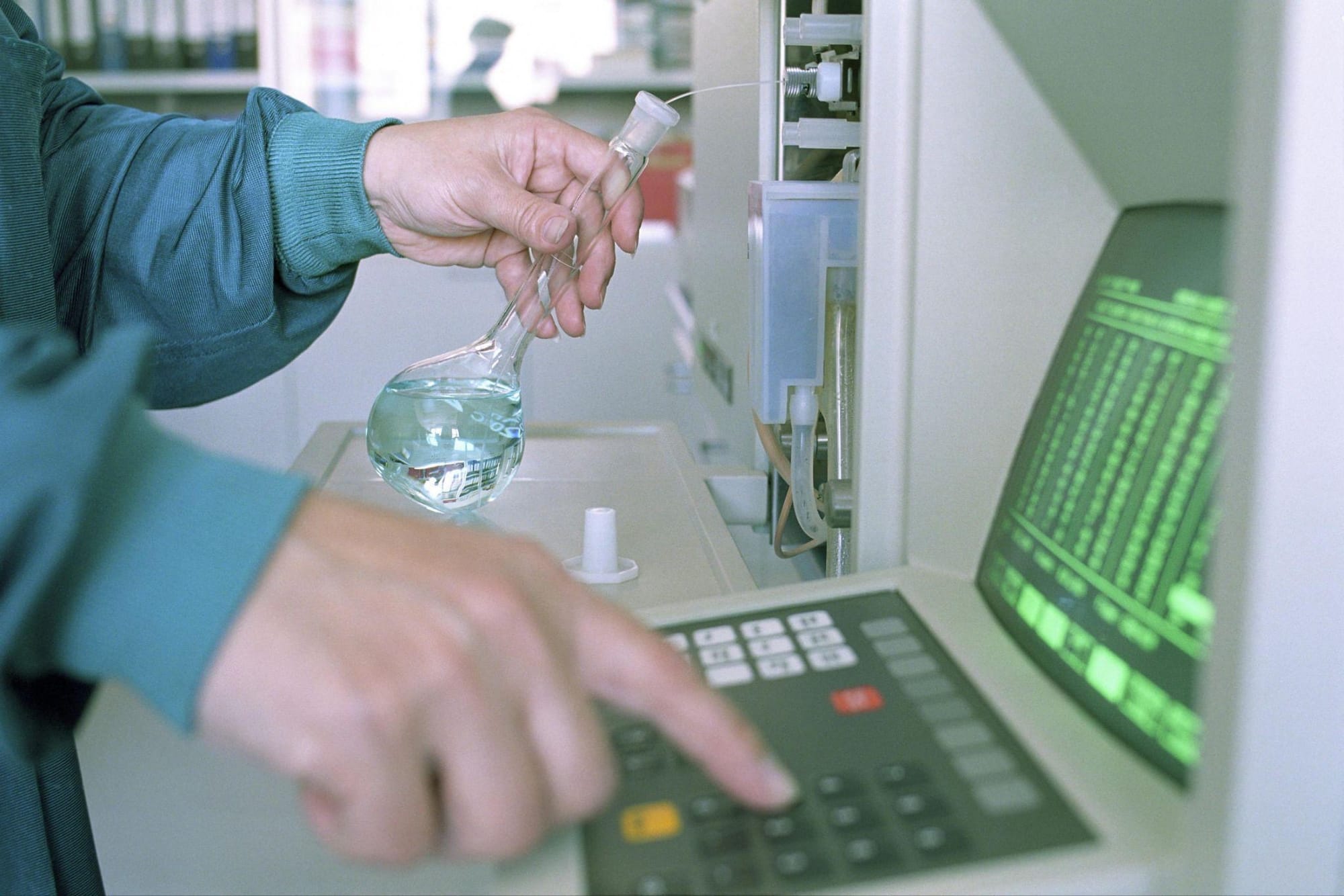
At Cryoin Europe, analytical capabilities cover both in-process and finished-product testing. Analytical procedures include gas chromatography, mass spectrometry, and moisture analysis at multiple stages of production. This allows contamination events to be identified before gases reach the finished-product stage.
For customers whose incoming quality-control protocols require analytical verification as part of the documentation process, the resulting records are based on the full production history rather than a single endpoint measurement.
Impurity profiling involves more than simply reporting total impurity levels for a given application. It also requires identifying the concentration of each individual contaminant species. A gas stream that meets a total impurity limit of 10 ppm, for example, may still fail an application requirement if more than 8 ppm consists of water vapor rather than acceptable inert components.
Packaging, Logistics, and the Last Meter Problem
Between the point at which a gas is produced and the point at which it is introduced into a process tool, there are multiple opportunities for contamination to occur. Potential contamination sources include cylinder surface contamination, valve outgassing, flexible connection materials, and handling procedures.
The final connection between the gas supply system and the process equipment is sometimes referred to as the “Last Meter” problem. This issue arises from limited control over the final delivery interface, where equipment configuration and handling practices can significantly affect the purity of the delivered gas.
Cryoin Europe addresses the Last Meter problem through best practices in cylinder preparation, gas cylinder packaging, and full chain-of-custody documentation throughout the supply process. For bulk liquid supply systems, cryogenic container cleanliness and fill-to-use timing are also important variables affecting final gas purity.
Customers building or upgrading gas distribution infrastructure can work with Cryoin Europe to align gas purity specifications across the entire supply chain, including both the production stage and downstream delivery infrastructure.
On-Site Generation vs. Merchant Supply
On-site production of nitrogen, oxygen, or hydrogen can be a practical option for large-volume industrial users. Depending on the technology selected — such as pressure swing adsorption (PSA), electrolysis, or small-scale cryogenic separation — on-site generation may become cost-competitive with merchant gas supply. The decision to invest in on-site generation depends on capital expenditure requirements, ongoing maintenance costs, and the purity specifications required for the final application.
PSA nitrogen systems, for example, can typically achieve purity levels of approximately 99.999%. However, residual oxygen and moisture concentrations may still fail to meet the requirements of advanced semiconductor manufacturing processes without additional purification stages.
Customers requiring gases produced at very low natural concentrations are often better served through long-term relationships with specialist suppliers such as Cryoin Europe. Likewise, organizations that do not consume sufficient gas volumes to justify investment in on-site infrastructure may find merchant supply to be the more economical option.
Closing Observation
As tolerances for high-purity applications continue to tighten, the technical demands placed on the industrial gas supply chain have increased significantly. Analytical techniques once used primarily within research and development environments are now routinely employed as quality-control tools to verify incoming gas purity at production facilities. Specification documents that once listed only a few impurity thresholds may now contain pages of contaminant limits and analytical requirements.
As a result, the relevant question is no longer whether a supplier can provide gas with a high-purity designation. Instead, customers increasingly need to evaluate whether a supplier possesses the process knowledge, analytical capability, and supply-chain discipline necessary to deliver gases that consistently meet the exact requirements of a given application. This is the operational focus of Cryoin Europe in the European market.