European Online Stores that Ship to the UK: How Do Customs Work and How Does Brexit Affect Them
The United Kingdom’s decision to leave the European Union (EU) in 2020, popularly known as Brexit, completely redefined the landscape of international e-commerce. What used to be a frictionless flow of goods within the Single Market has turned into a complex process that requires strict customs management, both for European companies selling to British customers and for UK consumers themselves.
So much so that even today, confusion on both sides remains high. Many EU retailers face serious logistical challenges, while British consumers question hidden costs and delays on their orders. To fully understand how the shipping process from Europe to the United Kingdom works, we analyse the case using Wanapix as an example, a well-known online shop based in Spain that ships personalised products such as mugs, cushions and blankets to customers throughout the United Kingdom and the rest of Europe.
The end of free movement
Before Brexit, shipping a product from Spain to the United Kingdom was essentially a domestic operation from a trade perspective. But now, the UK is considered a “third country” for customs purposes. This means that every parcel crossing the border is subject to customs checks, import declarations and, most importantly, the payment of taxes.
The main consequence of leaving the bloc is therefore increased bureaucracy, which affects both the speed and cost of operations.
Export and import declaration
For Wanapix, as for any other European online store, the process starts with the need to attach detailed information about the product:
- Commercial invoice: a key document that states the value of the goods.
- HS code (Harmonised System): a numerical code that classifies the goods in order to determine applicable duties.
- Proof of preferential origin: essential to determine whether tariffs apply under the EU–UK Trade and Cooperation Agreement (TCA).
All of this used to be optional, but is now mandatory for every shipment.
VAT and customs duties
This is where Brexit hits most directly the consumer’s wallet and companies’ cash flow. However, we must distinguish between two scenarios based on the value of the shipment:
Scenario A: low-value consignments (up to £135)
For online stores such as Wanapix that typically ship individual parcels of moderate value, this is the most common and complex rule.
Since January 2021, the UK Government requires that the EU seller register for VAT in the UK and charge UK VAT at the point of sale (Wanapix, in this case).
This forces foreign companies to declare and remit VAT directly to HM Revenue & Customs (HMRC) using a UK tax registration number. The consumer pays the final price with UK VAT included.
This measure aims to simplify things for local consumers, but places a tax and administrative burden on European stores.
Scenario B: high-value consignments (over £135)
For higher-value orders, the system follows the traditional model:
VAT and potentially other duties are charged to the recipient in the United Kingdom, unless the seller opts for a delivery system with duties unpaid (DDP), covering the costs in advance.
In addition, thanks to the TCA, if the product has “EU preferential origin” (i.e. manufactured wholly or substantially in the EU), no tariffs apply. But if origin is not proven, duties may be charged.
Wanapix’s logistics strategy: efficiency and transparency
For a company like Wanapix, delivery time is obviously critical. If personalised gifts arrive late or with unexpected costs, the brand’s reputation suffers. That is why they have had to implement high-efficiency logistics solutions to minimise the impact of Brexit.
Integration with logistics providers
They work closely with specialised carriers that have a strong customs clearance infrastructure in the UK. These partners are responsible for submitting all customs data electronically to HMRC before the parcel reaches the border.
Avoiding “surprise charges”
The worst nightmare in post-Brexit international e-commerce is the so-called Handling Fee that carriers charge UK consumers to manage VAT payment.
By handling VAT at the point of sale (Scenario A), Wanapix ensures that the price customers see on the website is the final price, with no additional charges upon delivery. This transparency has been essential for gaining the trust of British consumers.
The advantage of “EU preferential origin”
As a European manufacturer, Wanapix also benefits from the TCA rules of origin. Since its products are made in Spain, they generally enter the UK with zero tariffs, making its offer more competitive compared to manufacturers in other countries.
The impact on delivery times and customer experience
On the other hand, Brexit has inevitably added an extra layer of time to the logistics process.
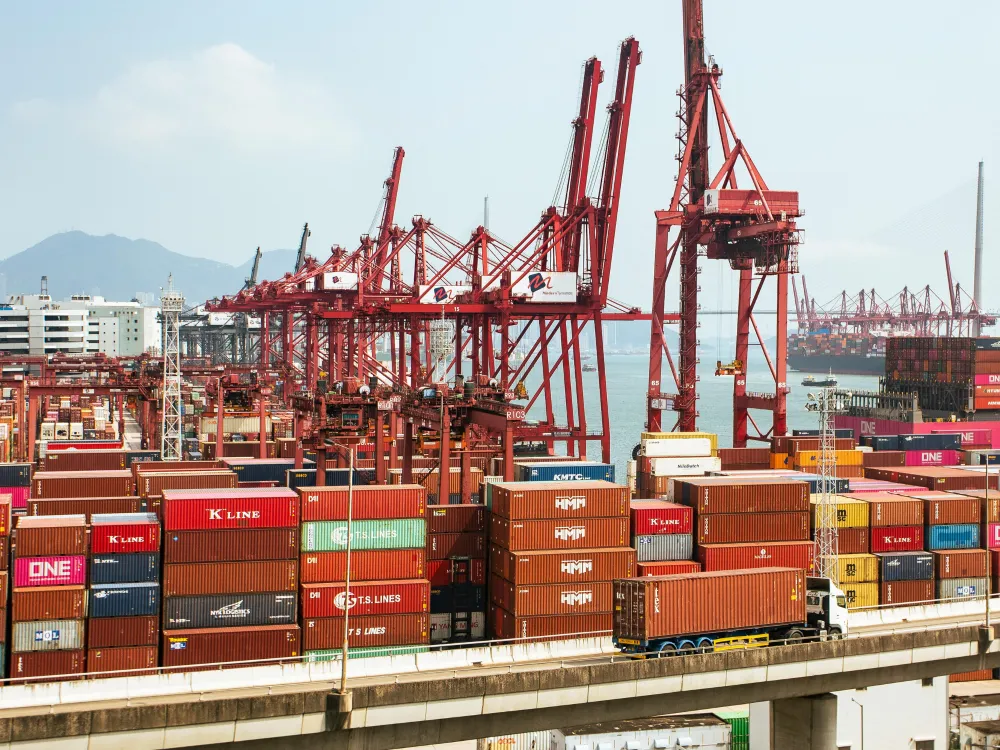
Although most parcels are processed automatically, the need to check documents and congestion at ports (both in the EU and the UK) can cause occasional delays.
European online stores therefore need to spend more time and resources preparing each shipment to ensure that the label, HS code and invoice are correct, in order to prevent the parcel from being held at customs. In most cases, documentation errors are the main cause of delays.
As a result, EU companies that have survived and thrived in the British market are those that have invested in customs automation and prioritised price transparency for the end customer.
There is currently pressure on the UK Government to implement simplified customs systems for SMEs (similar to the EU’s MOSS system), but until these measures materialise, management will continue to require strict attention to detail.
From the UK consumer’s point of view, however, the decision is clear: buying from European online stores such as Wanapix that display UK VAT and promise no extra delivery charges is the safest way to avoid surprises and delays.