GPU Futures Could Turn Computing Power Into a Tradable Commodity
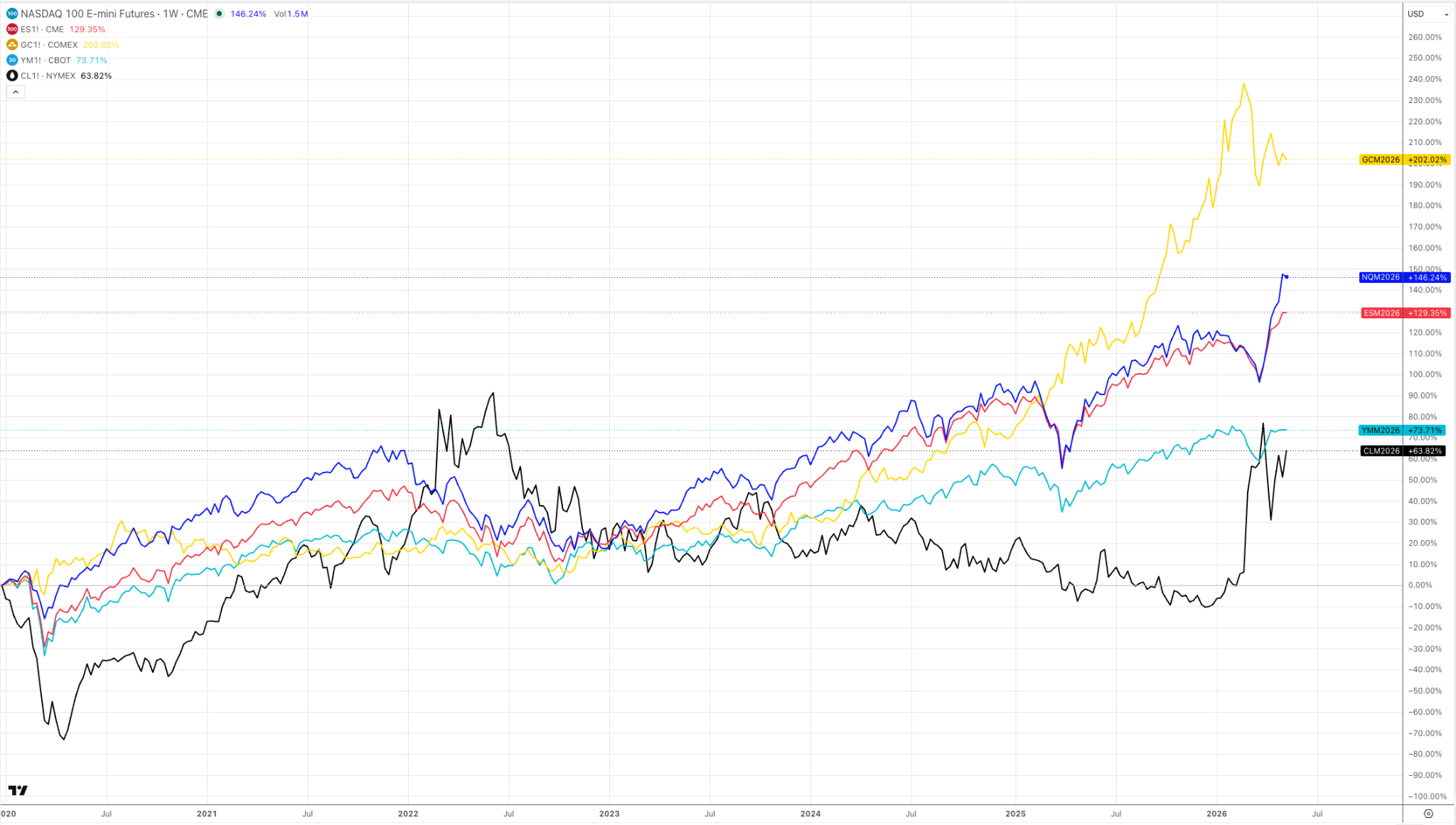
CME Group and Silicon Data's work on futures based on computing power may prove to be one of the most significant foundational elements in the next phase of artificial intelligence development. Nasdaq futures are based on the market's expectations for growth in technology-oriented stocks, including those linked to the AI market; however, computing power futures will be based on a more fundamental element - the infrastructure that AI companies are built on. For the first time, the marketplace will begin to create a separate, independent financial asset for computing resources that will be similar to the way that oil, electricity, or industrial metals function as financial assets. If this project receives regulatory approval, it will signal a change in how AI infrastructure is valued, from a category of technology services to a full-fledged class of tradeable resources that has its own hedging, pricing, and derivative systems.
The AI boom has revealed new economic dynamics created by the rapid advancement of computing technology over the last several years, with access to GPU infrastructure becoming a major competitive advantage among technology companies. Because of the limited availability of computing resources, many AI developers are either paying more to rent computing power or are unable to fully scale their models to meet operational needs. As a result, computing costs are becoming as critical to AI startups as material costs have historically been to traditional manufacturing industries.
Historically, this marketplace has been highly opaque. Hourly GPU rental prices are often determined through private agreements between cloud providers, data centers, and AI companies. The absence of a standardized pricing mechanism has historically made it difficult to establish a unified market benchmark for computing resources. The Silicon Data H100 Index represents one of the first major efforts to create a benchmark tied to the hourly rental price of graphics accelerators. Over time, the market for AI infrastructure is beginning to resemble traditional commodity markets, where speculative activity, risk management, and long-term planning revolve around the pricing of core production inputs.
At the same time, this development is contributing to substantial growth across multiple segments of the broader GPU production ecosystem. For example, according to recent research reports, total revenues generated within the semiconductor manufacturing materials market associated with High Performance Computing reached $73.2 billion in 2021. The fastest-growing segment of this market involved the production of raw materials used in advanced chip packaging technologies. This also illustrates the extent to which shortages of computing resources throughout the supply chain have affected every sector connected to GPU production, including silicon wafers, lithography, packaging, and related manufacturing components.
Another significant aspect of rising demand for AI-related chip manufacturing and packaging processes is the increasing reliance on more advanced and expensive production methods. Due to the extremely high density of components required for AI workloads, these systems depend on some of the most technologically sophisticated and capital-intensive semiconductor manufacturing processes available. Consequently, the pricing of computing resources will increasingly depend not only on the cost of GPUs themselves, but also on the level of investment, production capacity, and technological quality of the global semiconductor manufacturing industry.
The geography of the marketplace further reinforces the concentration of this emerging infrastructure cycle. Taiwan remains the primary consumption center for semiconductor manufacturing materials, while China is experiencing the strongest growth trends, and South Korea continues to play a major role as the global leader in memory chip production. North America is gradually evolving into a major center for the development of AI models and the consumption of computing power, yet it remains heavily reliant on manufacturers located in Asia. This creates an additional layer of risk within the global marketplace because supply chain disruptions could significantly increase the cost of computing, thereby affecting the economics of AI firms, many of which have become some of the top stock gainers in recent years.
The futures marketplace therefore represents an effort to adapt the financial system to a new reality in which computing power is increasingly viewed as a scarce infrastructure resource. This allows AI developers to lock in the costs associated with renting graphics processing units (GPUs) in advance, thereby mitigating exposure to price volatility, while simultaneously giving investors and traders access to a new speculative asset directly tied to the growth of the AI industry. For cloud service providers and data center operators, it also creates a mechanism for restructuring both service pricing models and infrastructure load management strategies.
Overall, these developments suggest that artificial intelligence is increasingly establishing itself as a resource-based economy. During the earlier stages of AI development, the market primarily focused on software and model creation; however, the focus has now shifted toward infrastructure and the costs associated with maintaining that infrastructure. Computing power is no longer viewed solely as a technical tool, but rather as a fundamental economic asset, with the availability and pricing of computing resources increasingly shaping the future dynamics of the broader industry.
Accordingly, the introduction of GPU futures represents far more than the creation of another financial instrument. It reflects a broader evolution within the AI industry and provides evidence that computing power is beginning to be treated by the marketplace as a strategically valuable commodity within the digital economy. As a result, computing resources may increasingly exhibit characteristics traditionally associated with commodity markets, including scarcity, price volatility, and competition over control of critical resources.