The Efficient Market Hypothesis and the Evolution of AI Trading Systems
Digital assets are no longer isolated entities. Traditional currency markets and digital assets are becoming increasingly interconnected, while both retail and institutional traders rely more heavily on algorithmic execution than manual chart analysis. At the same time, automated risk management systems have become increasingly important in response to changing market conditions.
If you want to succeed in a fast-paced environment like this, you might want to shift from an emotional approach to a more systematic one by using a structured methodology that consistently captures price action and eliminates mental fatigue.
How Currency Trading Intelligence Has Changed
If you have ever spent an extended period of time watching live charts, you know that markets can move at speeds faster than human reaction times. The majority of previous trading robots were designed around fixed “if-then” rules and those systems typically struggled during times of volatility and when the behaviour of the market changed.
The latest algorithms have moved far beyond fixed rule sets to create intelligent algorithms that can detect subtle patterns by processing enormous quantities of data using neural networks.
The responses created through intelligent algorithmic execution are now flexible enough to adapt to price movements, allowing the software to adjust based on shifts in liquidity rather than simply apply a pre-defined trade as the market evolves.
With the combination of deep learning and new methods of processing real-time information about the financial markets (compared with historical behaviour), these systems are beginning to develop a broad-based understanding of how the global economy actually works. As the technology continues to grow and evolve, so does the relationship between traditional finance and decentralised markets.
There are many different strategies that employ the same algorithmic logic for both fiat currency pairs and digital assets as a means to identify opportunity.
Navigating the Intersection Between Fiat & Crypto
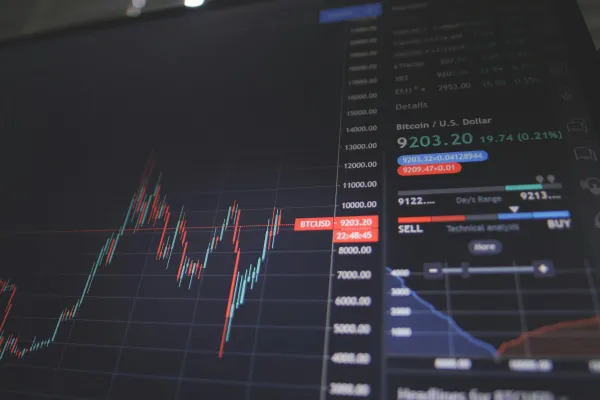
The rise of digital finance has introduced new correlations into the currency market, such as the relationship between the US Dollar Index and leading cryptocurrencies. Many modern systems track correlations between the US dollar and the performance of leading cryptocurrencies, using these correlations as a potential signal of changes within fiat currencies.
For instance, an abrupt move in the cryptocurrency market could indicate a more general shift in investor risk appetite. Tools that detect cross-market sentiment may identify that shift before it becomes obvious to the broader market. This kind of cross-market awareness can help protect portfolios during sudden changes in sentiment.
Both institutional firms and retail traders are searching for technologies to connect the worlds of fiat & crypto. As a result, the ability to execute trades across decentralized exchanges and major currency pairs gives traders a competitive edge. This will allow them to look at a multi-asset class market having more clarity and better decision support due to the utilization of integrated data points.
Risk Factor and Execution
Automation provides one of the more obvious benefits of precision. Even a small latency or slippage can diminish the effectiveness of your investment returns, particularly during major economic events. Automated execution can facilitate placement and closure of trades within milliseconds, ensuring your entries and exits are maintained as close to the specified price level as possible.
Given how much price volatility can occur when trading cross currency pairs, it is essential that the speed of execution is maximized.
Risk management is at the core of the overall strategy. Rather than relying on personally determined order sizes based on emotional circumstances, there are software programs that calculate position sizes based on the volatility of the market in real time. This more structured method of risk management may help to prevent the negative consequences of revenge trading and emotional bias.
Most of the time, the objective is to achieve gradual incremental improvements by executing trades individually in a disciplined manner rather than pursuing high-risk opportunities that lead to inconsistent results or loss.
Elements of a Resilient Strategy
Understanding the many features that affect the continued success of the automation framework you choose will help you select a framework with the ability to perform well over the long term. The best frameworks will provide far more than entries and exit points. They will also provide you with tools to respond as markets are evolving.
Some of the many features that may be included are:
- Adaptive Backtesting - Backtesting your strategies on historical data, with the ability to include spreads and commissions.
- Sentiment Analysis - Analyzing headlines and public comments about the markets in order to ascertain the mood of the market.
- Multi-Currency Correlation - Examining how one currency's movements affect other currencies, as well as how currency pairs relate to other financial instruments, such as cryptocurrencies.
- Dynamic Optimization - Updating input parameters for your strategies to accurately reflect the current cycle rather than using historical or outdated settings.
The above capabilities provide you with an opportunity to build a more resilient trading infrastructure. If liquidity in the financial markets decreases suddenly, or the level of market uncertainty increases dramatically, there are some automation frameworks that will decrease their exposure to the markets, or temporarily cease trading altogether. The level of automation achievable with the above capabilities is one of the key factors in differentiating between basic rule-based trading systems and more advanced decision-making frameworks.
The Future of Automated Finance
As we continue to see advances in computing power, we will also witness improved access to increasingly sophisticated trading tools. These tools, once limited to only the major investment banks, are now becoming available to a wider audience. This means that it will become increasingly important that your outcome is based on the nature of the logic that is behind your strategy and the quality of your data.
Through the merger of machine learning, forex markets, and crypto markets, we will see an increasingly integrated financial system. Future innovations will also likely work towards furthering the integration process, whereby automated systems will be able to manage portfolios that consist of multiple types of assets concurrently.
If you wish to remain competitive in this rapidly changing environment, you must be committed to continue with your education and be prepared to adapt to the numerous changes in the industry. Focused, disciplined execution of your trading plan and evidence-based decision-making will place you in a position to succeed in an environment that increasingly will reward both speed and intelligence above all else.