
Consumer surplus
What is consumer surplus?
Consumer surplus is the extra benefit a consumer gains when the price they actually pay in the market is less than they would be prepared to pay. It ca be shown graphically as the area from the ‘price line’ up to the demand curve.
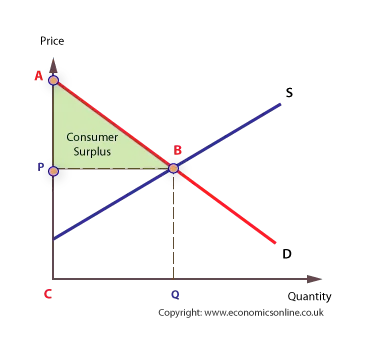
For example, if a consumer would be prepared to pay £100 for a tennis racket, and the market price is £75, their consumer surplus is £25. Different consumers will have different expecations of what they are prepared to pay, depending on their tastes and preferences, their needs, and their budget. The idea of ‘surplus’ is central to an understanding of the traditional model how markets work.
The phrase was first used by 19th century French engineer and economist Arsène Dupuit, and later developed by English economist Alfred Marshall.
-
More on consumer surplus